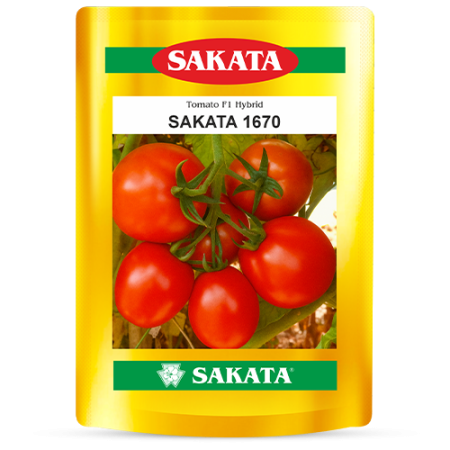
| Scientific Name |
Solanum lycopersicum |
| Hybrid |
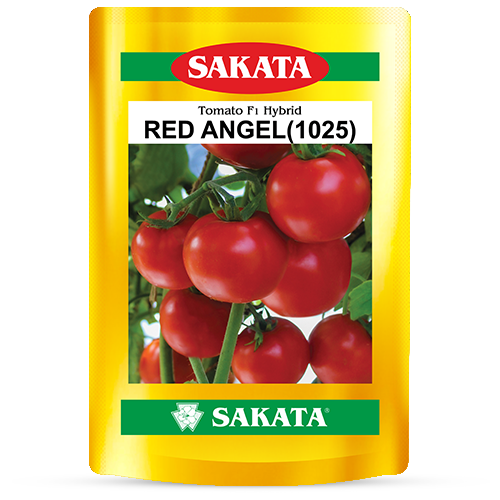
F1 Red Angel 1025 |
| Soil |
Tomatoes thrive in well-drained, somewhat fertile loam soil with good moisture retention. Sandy loam to clay loam soils with high organic content are suitable. The ideal soil pH is between 6.0 and 7.0. Avoid waterlogged conditions.
|
| Land Preparation |
Plough the field 2-3 times to achieve a fine tilth. Incorporate 15-20 tonnes of well-decomposed FYM or compost per hectare during the last ploughing. Prepare the field into beds or ridges and furrows depending on the irrigation method.
|
| Spacing |
90 × 45 cm |
| Climate |
Tomato is a warm season crop that requires a warm and cool climate. Optimum temperature for growth is between 21–24°C. Temperatures below 10°C and above 38°C can negatively impact growth and fruit set.
|
| Season |
Summer, Rainy, and Winter Season |
| Seed Rate |
70–75 g/ha |
| Fertilizers & Manures |
| Type |
Quantity / Notes |
Additional Info |
| FYM |
20–25 tonnes of FYM per hectare before the last ploughing |
| Nitrogen (N) |
200 kg/ha |
1/3rd of N as basal dose at transplanting. Apply the remaining N in two equal split doses at 30 and 60 days after transplanting.
|
| Phosphorus (P₂O₅) |
250 kg/ha |
Entire amount as basal dose at transplanting |
| Potassium (K₂O) |
250 kg/ha |
Entire amount as basal dose at transplanting |
|
Sandy soil fertilizer supply: Apply N in three split doses. The 1st dose of N should be applied along with phosphorus and potash. The 2nd dose just before plants take up active growth. The 3rd dose when the first flower clusters start setting fruits. Reduce N under high fertility conditions to avoid poor fruit set.
|
|
| Irrigation |
Drip irrigation is highly recommended for efficient water use once in 3 days |
| Weed Control |
Keep the field weed-free through regular manual weeding |
| Any Special Crop Practices |
Require support using stakes or trellises to keep the plants upright, improve air circulation, and facilitate harvesting. Start staking about 30 days after transplanting. |
| Diseases |
| Name of Disease |
Symptoms & Management |
| Tomato Leaf Curl Virus (TLCV) |
Transmitted by whiteflies. Use resistant varieties, control whitefly population by insecticides.
Control: Acetamiprid 20% SP, Thiamethoxam 25% WG, Flonicamid 50% WD @ 0.3 g/L
|
| Early Blight (Alternaria solani) |
Fungal airborne disease controlled by fungicides.
Control: Mancozeb 75% WP, Fluxapyroxad 250 G/L + Pyraclostrobin 250 G/L SC @ 0.4 ml/L, Metiram 55% + Pyraclostrobin 5% WG @ 1.5 g/L
|
| Late Blight (Phytophthora infestans) |
Severe at high rainfall; affects leaves & fruits.
Control: Cymoxanil 8% + Mancozeb 64% WP, Fenamidone 10% + Mancozeb 64% WP, Dimethomorph 50% WP
|
| Bacterial Wilt (Ralstonia solanacearum) |
Sudden wilting due to bacterial infection at root zone.
Control: Copper Oxy Chloride 50% WP (2g/L)+ Streptomycin 90% + Tetracycline hypochloride 10% (0.5g/L), Copper hydroxide 53.8 % DF + Streptomycin 90% + Tetracycline hypochloride 10% (0.5g/L)
|
| Fusarium Wilt (Fusarium oxysporum f. sp. lycopersici) |
Causes wilting of plants. Use resistant varieties and practice crop rotation.
Control: Captan 70% + Hexaconazole 5% WP
|
| Bacterial Blight (Xanthomonas vasicatoria) |
Brown to black raised spots on fruits; spread by wind and rain.
Control: Copper Oxy Chloride 50% WP (2 g/L) + Streptomycin 90% + Tetracycline hypochloride 10% (0.5 g/L), Kasugamycin 5% + COC 45% WP @ 2 g/L
|
| Root Knot Nematode |
Stunted growth, yellowing of foliage, wilting, nodules on roots.
Control: Fluopyrum 34.48% SC @ 300 ml/acre, Fluzaindolizine 1–2 L/ha, application of neem or pongamia cake 200–250 kg at land preparation
|
| Tospovirus (TSWV) |
Damage to leaves & fruits; transmitted by thrips.
Control: Blue sticky traps, spray Fipronil 7% + Hexythiazox 2% SC, Spirotetramat 240 g/L
|
| Collar Rot |
Affects collar region; discoloration of stem, wilting.
Control: Penflufen 13.28% + Trifloxystrobin 13.28% FS @ 0.5 ml/L, Pyraclostrobin 3.5% + Thiram 15% + Clothianidin 22.5% FS @ 0.5 ml/L
|
|
| Pests |
| Name of Pest |
Symptoms & Management |
| Tomato Fruit Borer (Helicoverpa armigera) |
Caterpillar bores inside fruit and damages it.
Control: Cyclaniliprole 10% DC @ 0.8 ml/L, Chlorantraniliprole 4.5% + Novaluron 11.5% + Emamectin benzoate 1.5% SC @ 1.2 ml/L
|
| Whitefly (Bemisia tabaci) |
Vector of TLCV. Use yellow sticky traps.
Control: Acetamiprid 20% SP @ 1 g/L, Thiamethoxam 25% WG @ 1 g/L, Flonicamid 50% WD @ 0.3 g/L
|
| Tomato Leafminer (Liriomyza spp.) |
Leaf miner creates serpentine markings on leaves.
Control: Cyantraniliprole 10.26% OD @ 1.8 ml/L, Chlorantraniliprole 8.8% + Thiamethoxam 17.5% @ 0.5 g/L
|
| Thrips (Thrips tabaci) |
Damage leaves & fruits; vector of TSWV. Use blue sticky traps.
Control: Fipronil 7% + Hexythiazox 2% SC, Spirotetramat 240 g/L
|
| Tuta absoluta |
Adult lays eggs inside fruit; larvae bore inside and damage fruit.
Control: Chlorantraniliprole 8.8% + Thiamethoxam 17.5% @ 0.5 g/L, Cyantraniliprole 7.3% SC + Diafenthiuron 36.4% SC @ 2 ml/L
|
|
| Harvesting |
Maturity: 60–65 DAP |
| Yield |
55–60 t/ha |